Here’s a reprise of something I’ve written previously because I think it’s ripe for an update. The new words are from 6 to 10.
Advertising is the war. Copy is the weapon. Words are the ammunition.
Although copywriters are equipped with an arsenal of words to use as he or she pleases, there are quite a number that are ever-popular in ads. These are usually everyday words, mindless superlatives and hard sell calls-to-acts.
I must add that I have been a chronic repeat offender myself. But then again, not all the words you see or hear in an ad are from the writers; if you know what I mean.
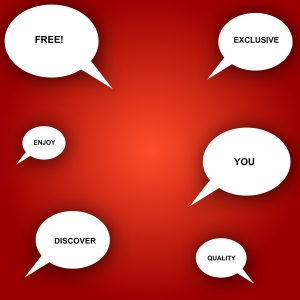
Here are my personal top ad words and what they actually mean, in no particular order:
1. Exclusive
If you think you’re going to get special, preferential or any form of private privileges, you’re wrong. The word exclusive is added to make things look more desirable than they actually are. I mean, if you really want to be exclusive, would you advertise in a website that gets like 1 million hits a day?
2. Enjoy
This one’s an evergreen favourite and probably the all-time, most used ad word. “Enjoy the experience. Enjoy the offer. Enjoy the freedom. Enjoy the splendour”… I could like go on forever. It’s a word used to get you thinking about enjoying yourself, hopefully with the product somewhere in the picture.
3. Free
This word is a dirty little fellow. One rule of thumb to keep in mind when you see this word is that there’s never such a thing as a free lunch. Nothing is free, period! The cost of whatever is “free” has already been added to the amount you are going to pay. So unless the ad is referring to air, be wary.
4. Amazing
This is probably the easiest superlative to use for a writer, simply because anything can be amazing. This post could be amazing, or maybe your internet connection or that client who’s an amazing pain in the ass. See? Something amazing need not be advertised if it truly is.
5. Hurry
Hurry! Offer ends XX Month 2010. So you are supposed to call, click or visit to purchase this exclusively enjoyable and amazing product that comes with a free gift before a particular date. Hurry means they aren’t selling enough as it is or think you are a sucker to fall for such a cheap trick.
And the new ones…
6. Like
I am certain you know where I’m going with this… Facebook lah of course! For such an obscure word – after centuries of being overshadowed by the word ‘Love’ – Like has attained sudden super-stardom. But what does it mean? Sadly, nothing.
7. You
When an ad says “You”, it actually means you. But do not be deceived by this cunning flattery, as the science of advertising reveals that the use of this word is to make sentences more personal. The ad is supposed to be written for you… only you; and not young adults aged 21 to 28 with moderate disposable income living in urban areas.
8. Quality
This one’s a classic. But if you see this word in an ad, it means the writer knows jack-shit about the product. Because if he knew something about the product, he wouldn’t use a generic term like “quality”. Different people have different standards to which they measure quality, and that means quality can’t be quantified.
9. New
New and improved. All-new. New taste. New formula. New pack… you get the idea? The reason this word is often used is because we are all suckers for new things. Who doesn’t like a new ride or a crisp, new shirt or the smell of a new book.
10. Discover
Aren’t we all seeking for something. To discover places, thrills, experiences, friendship, enjoyment and satisfaction. We writers use this word to implant curiosity and hopefully compel action. But sadly, the kind of discovery we want you to make involves pulling out your wallet.